
About Acadia National Park
Acadia National Park falls in the top ten list of most visited parks in the United States, welcoming more than three million travelers every year.
Early risers can drive, bike, or walk to watch the sunrise along Acadia's beautiful rocky shoreline on Ocean Drive. They'll be a month the first in the United States to see the dawning of a new day. Later they can enjoy dinner or simply stop in for popovers and strawberry jam at the famous Jordan Pond House, a delightful restaurant founded in the early 1870s.
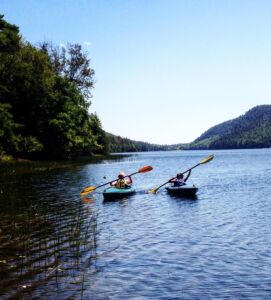
Acadia National Park was established by Woodrow Wilson on July 8, 1916 as Sieur de Monts National Monument with 6,000 acres. On February 26, 1919, Congress redesignated the area as Lafayette National Park making it the first national park east of the Mississippi River. It was not until January 19, 1929, that the national park came to be known by what we know it as today, Acadia National Park, to honor the former French colony of Acadia. Acadia National Park now covers more than 49,000 acres thanks to the remarkable dedication and philanthropy of wealthy private citizens such as Charles W. Eliot, George B. Dorr, and John D. Rockefeller, Jr. The park encompasses nearly half of Mount Desert Island, a scattering of smaller islands, and the Schoodic Peninsula.
Motorists who drive the Park Loop Road enjoy a 27-mile ride along Oceanside cliffs and through mountain forests, stopping at scenic turnouts and notable attractions along the way, such as the mighty Thunder Hole and Sand Beach.
One of the most amazing features of Acadia National park is the interlaced system of hiking trails and carriage roads. With varied lengths and levels of difficulty, the 125 miles of trails appeal to everyone from casual walkers to seasoned triathletes. Hike, bike, snowshoe, cross country ski - or go by horse-drawn carriage.
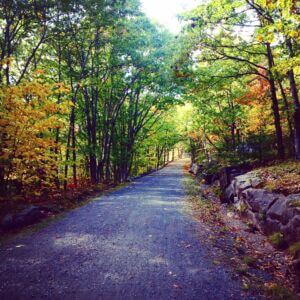
Though sometimes called carriage trails, the word trail is truly a misnomer. The historic carriage roads are 16 feet wide with generous crowns that keep them well drained. Considered the best example of broken stone roads in the United States, they are, indeed, an engineering wonder. Local workers quarried granite, right here on Mount Desert Island, to build the intricate network of roads and 17 spectacular stone bridges. In fact, the stone cutters developed such skill that Rockefeller asked them to create a more rustic look. He also took care to preserve trees and to landscape with native plants - ferns, sheep laurel,and blueberry bushes - so the roads blend naturally with their surroundings.
The well-marked roads wander through Acadia National Park, covering long, shady stretches of woodland, skirting peaceful lakes and ponds, circling mountain elevations, and showcasing breathtaking views of the Atlantic Ocean and nearby islands.
More than 60 years ago, Rockefeller donated 11,000 acres to Acadia National Park, complete with the road system he planned, funded, and constructed. Today, both Mainer and visitors enjoy the quiet beauty of Acadia National Park's beautiful carriage roads.
You'll love your visit to Acadia, and you'll want to come again to enjoy every amazing season.